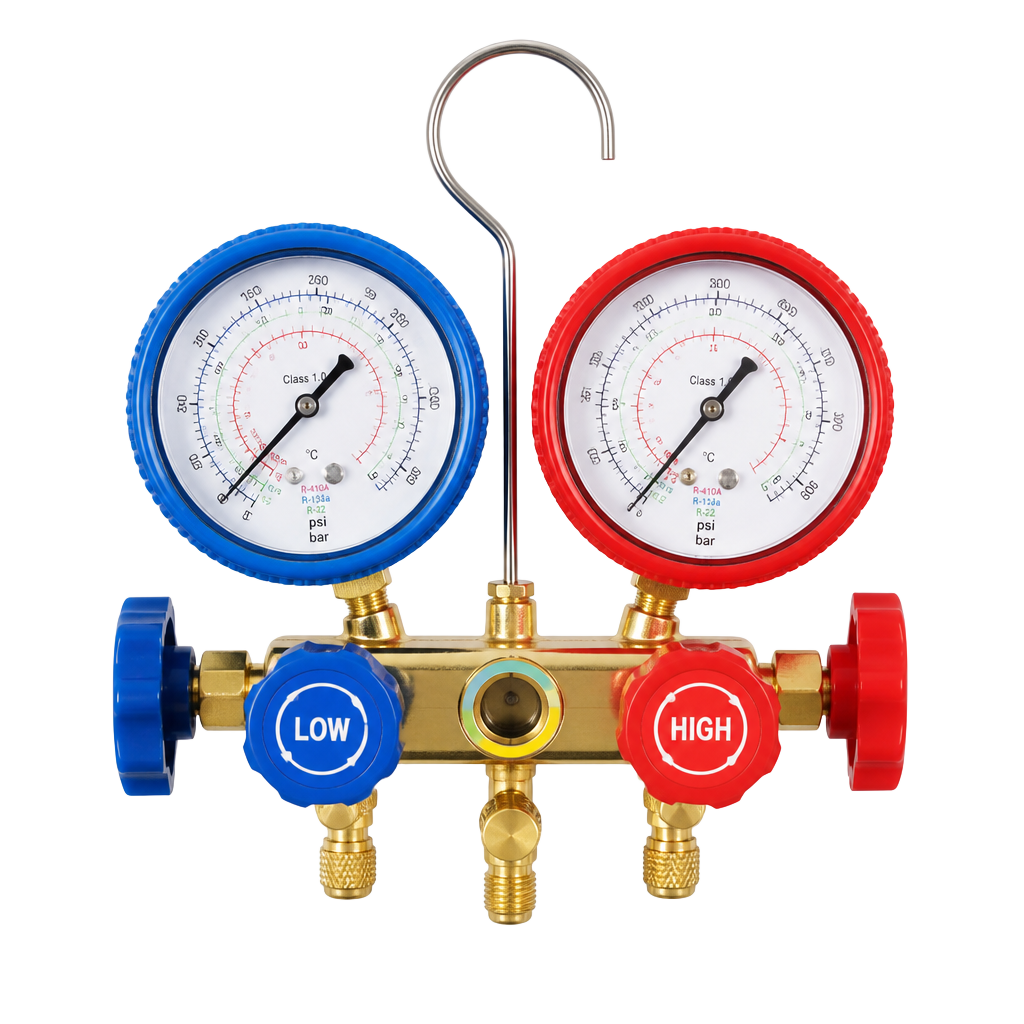
Air Conditioning Replacement
Replace end-of-life or banned refrigerant air conditioning with modern R-32 systems — 30% more efficient, often installed on your existing pipework in a single day.
- From
- £1,200 (like-for-like swap)
- Timeline
- 1 day per unit
- Warranty
- 5 years parts & labour
Why choose this
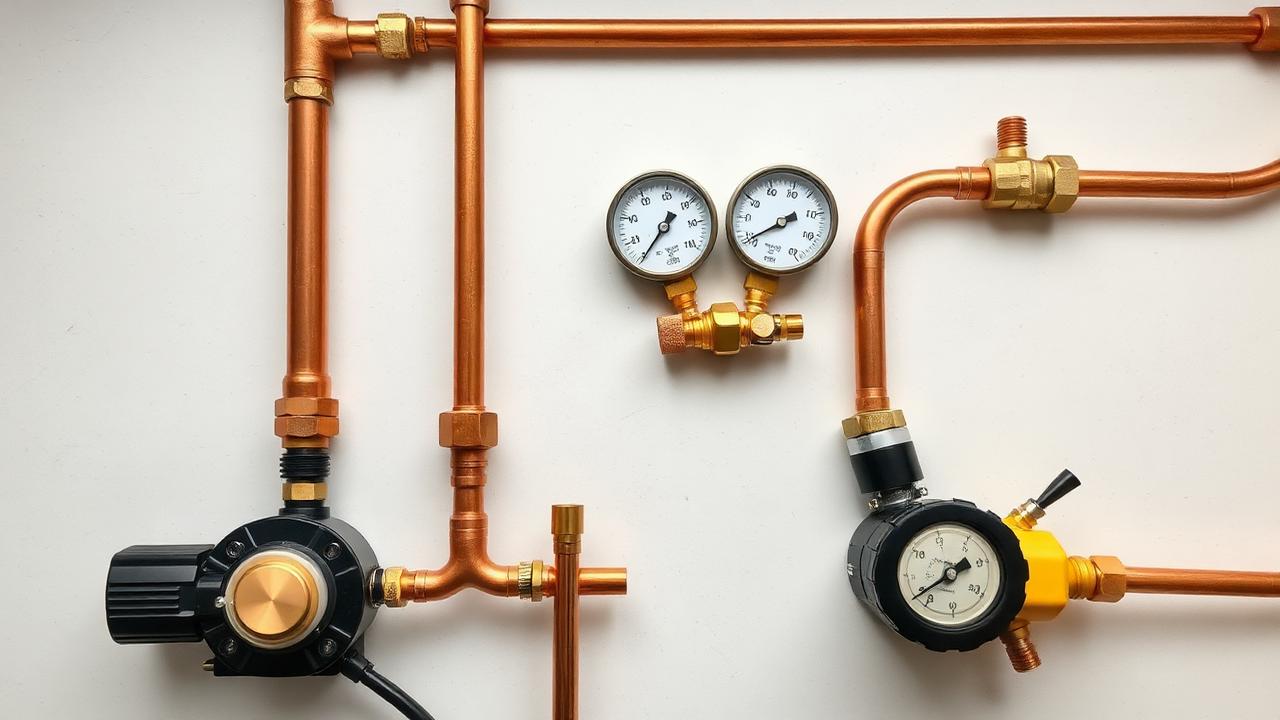
- Reuse existing pipework where possible
- 30–40% lower running costs vs 10-year-old kit
- R-32 has 68% lower GWP than R-410A
- Recycle refrigerant to F-Gas regulation
What's included
- Site assessment of existing pipework
- Nitrogen pressure test of retained pipe
- Refrigerant recovery to certified cylinders
- New indoor & outdoor units
- Full commissioning + updated F-Gas log
Why replace early
Air conditioning older than 10 years typically runs at 40–50% higher electricity consumption than modern R-32 inverters. On a 5 kW unit used 6 hours/day that's roughly £180/year in extra running cost. Combined with the risk of compressor failure (average 12–15 year life) and the phase-out of older refrigerants, most systems make financial sense to replace at year 10–12.
R-22 systems (installed pre-2004) are now banned for maintenance — you cannot legally top up refrigerant, so any leak means end of life. R-410A is being phased down under the F-Gas Regulation with production quotas cutting cost supply annually; prices have already risen 300% since 2018. Replacement to R-32 is a one-off cost that eliminates all these regulatory risks.
Reusing existing pipework
Copper pipe survives compressor changes if it was properly installed and hasn't been contaminated. We pressure-test the retained pipework at 4 MPa with dry nitrogen, hold for 30 minutes and flush before charging. If the pipe fails the test, we replace — typical replacement pipe runs are £45–£65 per metre.
R-22 to R-32 conversions need particular care — R-22 mineral oil residue is incompatible with R-32's POE synthetic oil. We flush the pipework with dedicated flushing gas and validate residual oil is below 5% of pipe volume before commissioning. R-410A to R-32 uses the same POE oil so simple pressure test is sufficient.
Refrigerant recovery
R-22 has been phased out — new supply is banned and it must be recovered to certified cylinders (never vented). R-410A remains legal but is being phased down; we credit the market value of recovered gas against your replacement invoice.
We operate as an F-Gas Category 1 recovery contractor. Every kilogram of recovered refrigerant is logged with cylinder serial number, source system, date and F-Gas company reference — the audit trail HMRC and Environment Agency inspectors expect to see.
The replacement day
For a like-for-like single split swap: 08:00 arrival, isolate power and refrigerant. 09:00 recover refrigerant to certified cylinder. 10:00 remove old indoor and outdoor units, WEEE-tag for disposal. 11:00 install new units on retained brackets. 12:00 pressure-test pipework at 4 MPa. 13:00 vacuum to 500 microns. 14:00 charge, commission and set up WiFi. 15:00 handover, documentation and clean up.
We leave you with the disposal certificate, refrigerant log, commissioning report, warranty registration and updated F-Gas records — everything the landlord, insurer or auditor will ever ask for.
Commercial replacement programmes
For estates with ten or more units due replacement, we deliver structured replacement programmes phased around trading hours. Typical rollout is 4–8 units per week across a 6–12 month programme, coordinated with your facilities team.
We include an obsolescence audit as part of the free initial survey — every existing unit is logged with age, refrigerant type, condition and estimated remaining life. The output is a prioritised replacement schedule with fixed pricing that flexes only for scope changes agreed in writing.
Environmental credentials
R-32 has a GWP of 675 versus R-410A's 2,088 and R-22's 1,810 — a 68% reduction versus R-410A. Combined with typical charge weight reduction (R-32 is more thermodynamically efficient, needing less refrigerant for the same cooling), total CO₂-equivalent liability drops by around 75% on replacement.
We provide a written environmental statement covering embodied carbon of the new equipment, avoided operational emissions from higher efficiency, and end-of-life carbon liability of the retired unit. Useful for corporate ESG reporting and BREEAM in-use assessments.
When repair beats replace
Not every failing AC needs replacement. If the compressor is under 8 years old and the fault is a serviceable component — fan motor, PCB, capacitor, expansion valve — repair is usually the right economic call. Typical repair costs: PCB £180–£350, fan motor £120–£240, capacitor £40–£80, expansion valve £160–£280.
We quote both repair and replace on every fault callout so you have the numbers to decide. Where the equipment is over 12 years old, or the fault is compressor-related, or you rely on it commercially and cannot tolerate a second failure, replacement is almost always the better long-term investment.
Programme replacement across estates
Commercial estates with 20+ AC units benefit from a phased replacement programme rather than reactive break-fix. We audit the full estate — age, refrigerant, capacity, condition, remaining life — and produce a prioritised replacement schedule spanning 3–5 years, aligned with maintenance budgets and building occupancy patterns.
Programme delivery is typically 4–8 units per week over an agreed rollout window. Costs are fixed per unit type, invoiced monthly against completed units. Reactive callouts during the programme are prioritised and honoured at reduced rates — no penalty for waiting your turn in the replacement queue.
Handling refrigerant obligations at handover
When you take on a building or estate that already has installed AC, refrigerant compliance becomes your problem. Every system containing 5 tCO₂e or more of F-Gas requires statutory leak checks (annually below 50 tCO₂e, 6-monthly above). Missing records mean assumed non-compliance and potentially unlimited fines.
As part of any replacement or takeover we audit existing systems and reconstruct the refrigerant log where possible from manufacturer serial numbers and site inspection. Where records are unrecoverable we conduct a formal baseline leak test to establish current status, then maintain the log going forward as your F-Gas Responsible Person.
Warranty transfer, TUPE and portfolio takeovers
When you inherit an existing air conditioning estate — through property acquisition, tenant transfer or main-contractor changeover — the warranty and maintenance status is usually opaque. Records may be incomplete, previous contractor relationships broken and manufacturer registrations lapsed. Our takeover audit reconstructs the full picture: age from serial numbers, refrigerant type from nameplate data, remaining manufacturer warranty from registered install dates, and service history from any surviving documentation.
For manufacturer warranty specifically, most brands allow warranty transfer to a new accredited installer provided a written declaration is made within 30 days of takeover. We handle this administrative process on behalf of new clients as part of takeover — preserving remaining warranty value that would otherwise be lost through paperwork oversight. On a typical 30-unit commercial estate this can preserve £3,000–£8,000 of remaining warranty coverage.
End-of-life recycling and circular economy
Removed AC units are dismantled and materially recycled — steel casings, copper coils, aluminium fins, plastic fascias and electronic control boards all go into separate WEEE recycling streams under our licensed carrier arrangement. Recoverable refrigerant is either reclaimed for reuse (R-410A) or destroyed via high-temperature incineration (R-22) — never vented.
We provide the full WEEE disposal certificate and refrigerant destruction certificate as part of your handover pack — supporting any ESG reporting obligation and providing legal defence against fly-tipping accusations that occasionally follow contractor removals. Material recovery rates on our destination facilities average 87% by weight — well above the WEEE regulation minimum of 75% for large household appliance category equipment.
Frequently asked questions
Do you take away the old unit?+
Yes — dispose to WEEE regulations and provide a certificate. Refrigerant is recovered and either recycled or destroyed.
Can I keep the same wall bracket?+
Usually — modern indoor units are within 30 mm of legacy dimensions. We assess on survey.
Will R-32 work through 15-year-old copper pipe?+
Usually yes, provided the pipe passes a 4 MPa nitrogen pressure test and is flushed to remove residual oil. Around 85% of retained pipe passes on first test.
How long does a replacement take?+
One day per split unit including recovery, install, commissioning and documentation. Multi-splits typically 2–3 days.
Is the WiFi controller included?+
Yes — modern R-32 units ship with WiFi controllers as standard. We configure the app during commissioning.
Can you replace just the outdoor unit?+
Sometimes — provided the indoor unit is refrigerant-compatible and less than 5 years old. Otherwise a matched pair is cheaper long-term.
Can you replace a system while the building stays open?+
Yes — most commercial replacements are staged evenings, overnight or weekends. Domestic replacements typically complete in one working day per unit.
What if the existing pipework fails the pressure test?+
We replace only the failed sections and re-test, or replace the full run if failure is widespread. Cost is quoted before we proceed; you decide.
Do you replace commercial cassettes without dropping the ceiling?+
Yes — modern cassette dimensions have converged around 840×840 mm suspended ceiling apertures, matching legacy Fujitsu, Daikin and Mitsubishi units within 5-10 mm. Direct swap without ceiling tile modification is possible in 85% of cases we survey. Where dimensions have changed, we cut and reinstate the adjacent ceiling tile at commissioning — one hour of extra labour per cassette rather than a full ceiling drop.
Related services
Home Air Conditioning Installation
Whole-home cooling & heating with quiet inverter splits engineered for UK houses and flats.
Commercial Air Conditioning Installation
Retail, hospitality and mixed-use fit-outs — cassettes, ducted and VRF with BMS integration.
Office Air Conditioning Installation
Discrete cassette and ducted systems that keep meeting rooms cool without wall-mounted eyesores.