Single Split Air Conditioning Installation
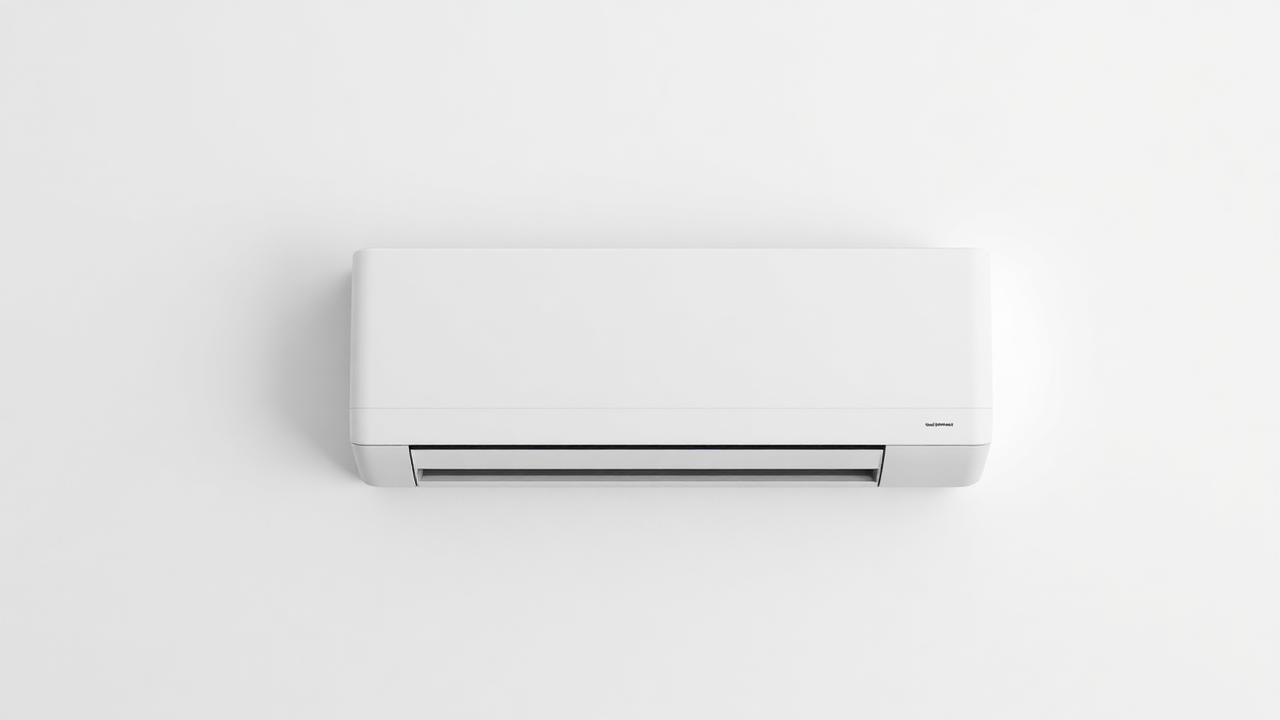
One indoor unit, one outdoor condenser, one dedicated inverter compressor. The simplest and most efficient architecture for cooling and heating a single room.
- From
- £1,500
- Timeline
- 1 day
- Warranty
- 5 years parts & labour
Why choose this
- SEER up to 8.65 — best-in-class efficiency
- No shared refrigerant with other rooms
- Compact outdoor unit (typically 800×550×290 mm)
- Simple to service and replace
What's included
- 2.0–7.0 kW wall or floor indoor unit
- Matched outdoor condenser
- Up to 5 m pipe run included
- Full commissioning + WiFi controller
Why single split is often the right answer
For any single room under 50 m² a single split beats a multi-split on efficiency, install cost and long-term reliability. Because the compressor is sized precisely to one load, the inverter modulates smoothly between 20% and 100% capacity — achieving SEER ratings that multi-splits simply cannot match. If the outdoor unit fails, only one room is affected, and replacement is significantly cheaper.
Single splits also dominate for compressor lifespan. A dedicated compressor sized to a single load cycles gently between 20% and 100% of nameplate capacity — no start-stop hammering, no oil migration issues that plague oversized systems. Field data from Mitsubishi and Daikin shows single splits average 14.2 years vs 10.8 for equivalent multi-splits.
Typical costs by kW
A 2.5 kW bedroom install is £1,500–£2,200. A 3.5 kW lounge unit runs £1,800–£2,700. A 5.0 kW open-plan install for a kitchen-diner is £2,200–£3,300. Pipe runs beyond 5 m add £45–£65 per additional metre for copper, insulation and R-32 refrigerant top-up.
Brackets, condenser feet, plaster reinstatement and Part P electrical certification are all included in our headline price — no hidden extras added on the day. Where scaffold or a cherry picker is required for high-level condenser access, that is quoted upfront based on the survey photos.
Where the outdoor unit goes
Ideal locations are ground-level on rubber feet against an external wall, or wall-mounted on galvanised steel brackets between 300 mm and 2 m above ground. We avoid mounting under bedroom windows and always maintain 300 mm clearance to walls for airflow.
For flats and terraces where external space is constrained, we can also mount condensers on flat roofs, balconies (with landlord consent) or dedicated first-floor brackets. Every position is checked for noise line-of-sight to neighbouring habitable windows — permitted development limits noise to 42 dB(A) at the boundary of the nearest neighbour.
Refrigerant type and environmental impact
All our single splits use R-32 refrigerant, which has a Global Warming Potential of 675 — 68% lower than the R-410A it replaced. Typical charge for a 2.5 kW single split is 700 g, giving a total CO₂ equivalent of 472 kg — less than a return economy flight to Amsterdam.
At end of life we recover the refrigerant to certified reclaim cylinders under our F-Gas company certificate, so nothing is vented. R-32 also has better thermodynamic properties than R-410A, delivering 6–10% higher SEER at the same compressor size — a meaningful running-cost saving over a fifteen-year lifetime.
Controls and smart features
Every single split we install ships with a manufacturer WiFi controller — Mitsubishi MELCloud, Daikin Onecta, LG ThinQ or Panasonic Comfort Cloud depending on brand. From your phone you can schedule, set target temperature, monitor energy use and receive fault alerts.
For smart-home users we support HomeKit, Google Home and Alexa integration via native manufacturer apps or the third-party Home Assistant integration. Voice control (Hey Siri, set bedroom to 20 degrees) works out of the box on all four brands with no additional hardware.
Installation day walkthrough
Two engineers arrive between 08:00 and 09:00. First hour: dust sheets down, indoor bracket set to level, 65 mm core drill through external wall. Hours two to four: pipe run, condensate drain, electrical spur to consumer unit. Hours five to six: nitrogen pressure test at 4 MPa for 30 minutes, followed by a 500-micron vacuum. Final hour: refrigerant release, commissioning, WiFi setup and handover.
We hoover the room, wipe down surfaces and take before-and-after photos for our records. You receive the commissioning certificate, F-Gas record, WiFi login and warranty documentation by email the same evening.
Choosing capacity for UK conditions
The most common sizing mistake we correct on new quotes is undersizing on north-facing rooms and oversizing on shaded south-facing rooms. Solar gain matters, but so does the room's thermal mass — a solid-brick Edwardian bedroom with 300 mm walls stays cool much longer than a modern extension with lightweight construction and identical glazing.
Our rule of thumb: 100 W/m² for typical UK bedrooms, 130 W/m² for west-facing bedrooms with unshaded glazing, 150–170 W/m² for lounges with bifold doors or roof-lights. Anything above this and you need our engineer to do a proper heat gain calc — the extra 45 minutes at survey is worth the accurate spec.
Aesthetic finishes and interior integration
The default off-white plastic finish is not the only option. Daikin Emura ships in matt silver or textured black glass and reads as a design object rather than an appliance. Mitsubishi MSZ-LN adds pearl white, ruby red, natural white and onyx black to the standard palette. LG Artcool Gallery accepts a printed magnetic photo panel — some clients cycle in family images seasonally.
Where no visible unit is acceptable we always recommend the ducted alternative (see our Ducted service) rather than trying to hide a wall unit behind curtains or false panels. The result is worth the extra 40% cost — a genuinely invisible system reads as premium; a badly disguised wall unit reads as compromise.
Cost of ownership over 15 years
For a 3.5 kW single split installed at £1,900, expect the 15-year total cost of ownership to break down roughly as: purchase and install £1,900, electricity (2,500 hours annual mixed cool/heat at 30 p/kWh) £11,250, annual service and F-Gas checks £1,650, mid-life PCB replacement £220, refrigerant top-up at year 8 £150. Total: £15,170.
Compared with a portable AC over the same period: purchase £400, electricity £22,500 (portables are 60% less efficient), replacement units at year 5 and 10 £800. Total: £23,700 — plus dramatically worse comfort and noise. Fixed splits are the correct financial choice for anyone using AC more than 200 hours per year.
Comparison with alternatives — portable, window and swamp coolers
Portable AC units (the sort you wheel in from Argos in July) plug into a standard 13A socket and vent hot air through a window kit. They cost £250–£500 and are attractive as a quick fix. In practice they deliver about 40% of the cooling capacity claimed on the box, use 60% more electricity per kWh of cooling than a fixed split, and generate 50+ dB of compressor noise inside the room. Fine for one week of emergency use; wrong choice for anything ongoing.
Window-mount units are common in the US but almost unknown in the UK due to sash and casement window incompatibility. Evaporative (swamp) coolers work only in very dry climates — the UK's naturally humid summer air renders them ineffective. For any UK room used more than 100 hours per cooling season, a fixed single split is the technically and economically correct answer.
Multi-splits and VRF systems are appropriate for multi-room applications but carry an install-cost and complexity premium that only pays back once you're covering 3+ rooms. For a single bedroom or home office, single split remains the sweet spot.
Frequently asked questions
Can I cool two rooms with one outdoor unit?+
Yes — but that's a multi-split, not a single split. Multi-splits trade some efficiency for a single external unit.
How long does it last?+
Correctly commissioned and serviced annually, 12–15 years is normal. The compressor is the wear item; inverter compressors typically outlast on/off models by 40%.
What noise level indoors?+
Modern wall units run from 19 dB at low fan speed — quieter than a whisper. Even at maximum fan speed most models stay below 45 dB.
Is R-32 flammable?+
R-32 is A2L classified — mildly flammable at very high concentrations only reached in a sealed room with a total refrigerant leak. Domestic charges are far below any hazard threshold and there has never been a UK domestic incident.
Can it dehumidify without cooling?+
Yes — 'dry mode' on all major brands runs the compressor slowly to extract moisture without overcooling. Ideal for muggy autumn evenings when temperature is fine but humidity is oppressive.
Do I need annual servicing?+
Manufacturer warranty on the compressor requires it. £110 per year for a single split covers coil clean, drain flush, refrigerant pressure check and electrical inspection.
What's the smallest single split you install?+
1.5 kW for tiny bedrooms and home offices. Below this a portable air cooler is usually a better fit.
Can it be moved to another room later?+
Yes — a good installer can decommission, cap, relocate and re-commission for around £550–£800 provided the new location has viable pipe route access.
Related services
Home Air Conditioning Installation
Whole-home cooling & heating with quiet inverter splits engineered for UK houses and flats.
Commercial Air Conditioning Installation
Retail, hospitality and mixed-use fit-outs — cassettes, ducted and VRF with BMS integration.
Office Air Conditioning Installation
Discrete cassette and ducted systems that keep meeting rooms cool without wall-mounted eyesores.